

Dear subscriber,
We apologize for not giving or writing the weekly review last weekend bare with us, in today’s review we start we the news that shocked many as Raila and Ruto met and made Truce now what next for them? we have also prepared you with other hit head news updates, take a look.,
1.Ruto and Odinga Unite in Bid for AU Commission Chairmanship,
2. Faith Odhiambo Elected President of Law Society of Kenya
3. Kisii Deputy Governor Impeached
4.KMPDU Protest Turns Violent as Secretary-General Dr. Davji Atellah Shot
5. Kenya and Haiti Forge Alliance, Deploy 1000 Kenyan Police Officers
6. AG Justin Muturi Halts Housing Levy Collection by KRA
7. New Twist In Meru,
8. Kenya Announces Elimination of Diploma and Certificate Courses from Public Universities in Education Reform
A Silent Handshake Emerges as Ruto and Odinga Unite Over AU Commission Chairmanship Bid
President William Ruto and Azimio leader Raila Odinga have displayed a newfound camaraderie during a meeting in Uganda, signaling a silent handshake between former political foes.
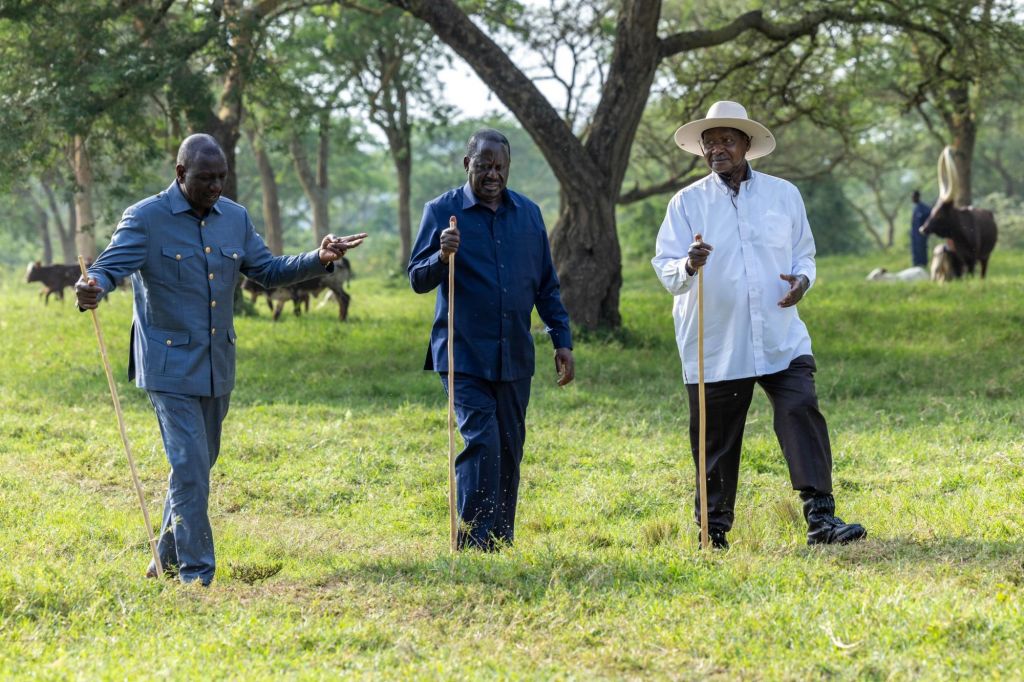
Photos of Ruto, Raila, and Ugandan President Yoweri Museveni sparked speculation about a potential political deal, with allies and foes alike caught off guard by the unexpected alliance.
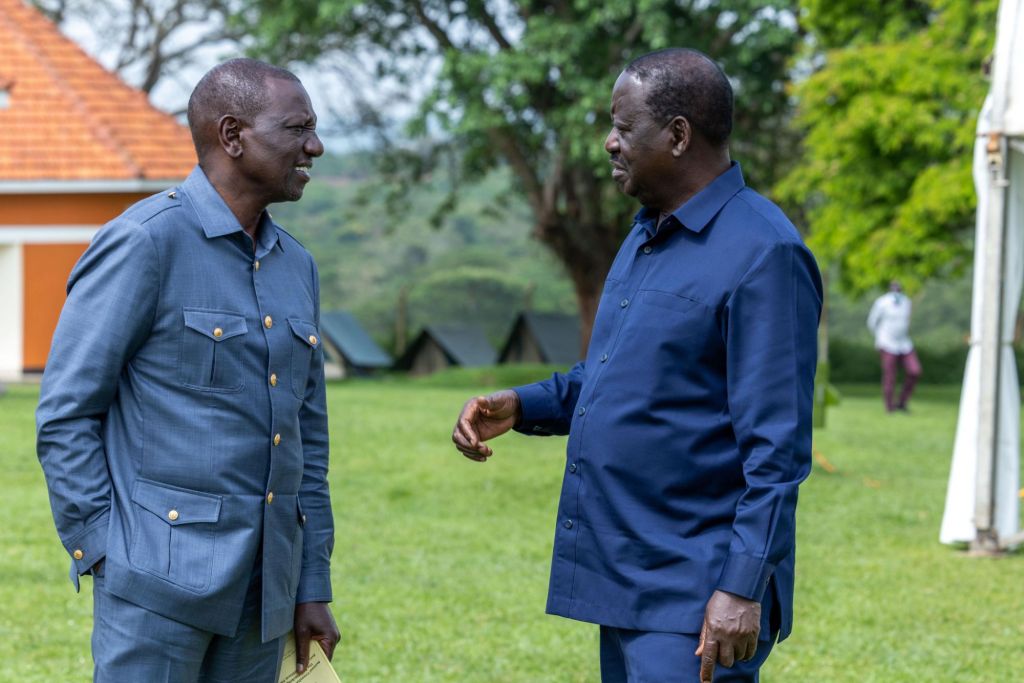
Opposition leader Raila Odinga downplayed the meeting, describing it as a chance encounter in Uganda. The trio engaged in discussions at President Museveni’s farm in Kisozi, Gomba District, on Monday, February 28, 2024.
Raila clarified that Ruto’s visit was centered around oil issues with Museveni, while he sought the Ugandan leader’s support for his bid to become the chairperson of the African Union Commission.
The history between Ruto and Museveni has been tense, primarily due to an oil trade dispute between Kenya and Uganda. The opposition had previously organized sustained protests against the Ruto regime, leading to instability in the country and a refusal to recognize Ruto as the president.
For context, candidates vying for the AU Commission chairmanship must secure the backing of their home country. President Ruto’s government has pledged support for Raila’s candidacy, emphasizing a commitment to strengthening diplomatic and economic ties between Kenya and Uganda.
As the news continues to trend, the question still remain what bext fir the two?
Lawyer Faith Odhiambo Elected As New President of the Law Society of Kenya
During Thursday’s elections, Faith Odhiambo, former Vice President of the Law Society of Kenya (LSK), secured a resounding victory to become the 51st President of the Council. The race, featuring five prominent candidates – Peter Wanyama, Carolyne Kamende, Harriet Mboche, Kipkoech Bernhard Ngetich, and the eventual winner, Faith Odhiambo – captivated the legal community.

Odhiambo, with a history of service within the LSK as Vice President, clinched the presidency by amassing 3,113 votes, overshadowing her closest rival, Peter Wanyama, who garnered 2,165 votes. Carolyne Kamende secured the third position with 888 votes. Remarkably, Odhiambo led in all six polling stations at the Milimani Law Courts and exhibited significant support in various regions, including Nyeri, Homa Bay, Nanyuki, Kisii, Machakos, Kisumu, and Nakuru.
Of the 15,715 registered members, an encouraging 7,521 actively participated in the elections, emphasizing the significance of this democratic process within the legal fraternity. Impressively, 7,510 votes were declared valid, affirming the legitimacy and fairness of the electoral proceedings.
In her campaign, President-elect Faith Odhiambo emphasized a steadfast commitment to upholding the rule of law and ensuring the Law Society of Kenya remains a robust defender of legal principles. With this resounding mandate, she steps into the shoes of Eric Theuri, prepared to lead the Council into a new era.

Kisii Deputy Governor Robert Mondo Faces Impeachment Over Allegations
Kisii Deputy Governor Robert Monda has been ousted from office following a dramatic impeachment session at the Kisii County Assembly. The decisive move came on Thursday evening when 53 out of the 70 Members of County Assembly (MCAs) voted in favor of the ouster motion, citing allegations of abuse of office and bribery.
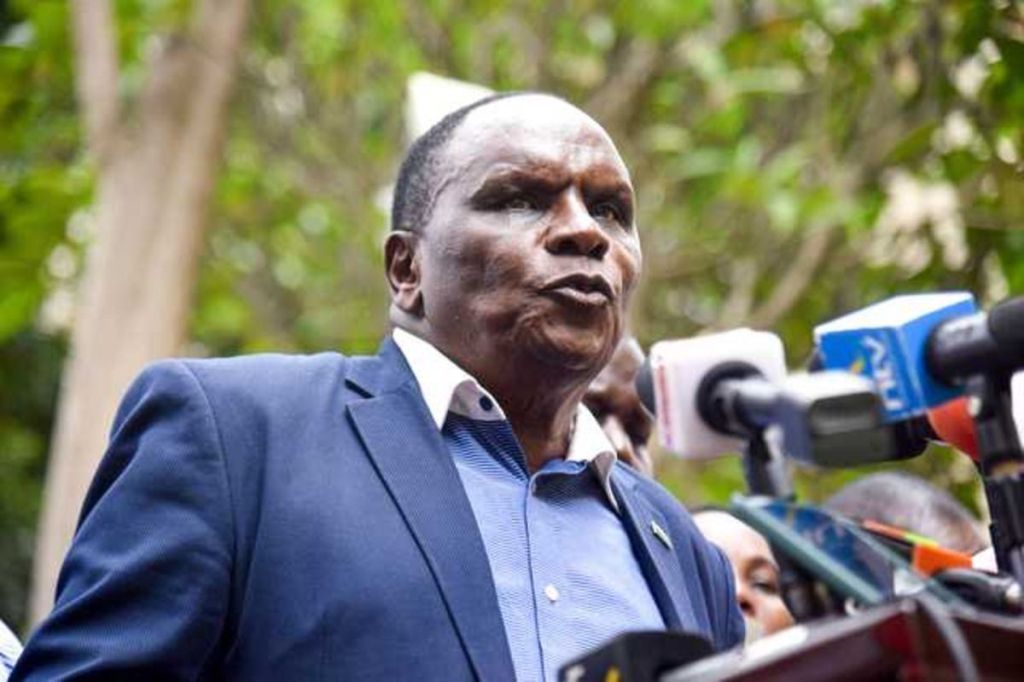
The impeachment motion, spearheaded by Ichuni Ward MCA Wycliffe Siocha, unfolded against a backdrop of mounting tension within the county’s political landscape. Siocha, addressing the media, emphasized the gravity of the accusations against Monda, pointing to a series of alleged misconduct that fueled the assembly’s determination to remove him from office.
Monda’s legal representative, Advocate Katwa Kigen, addressed the media following the impeachment proceedings, expressing discontent and alleging that the results were predetermined based on observed voting patterns. Kigen vowed to challenge the impeachment, setting the stage for potential legal battles that could further intensify the political turmoil in Kisii.
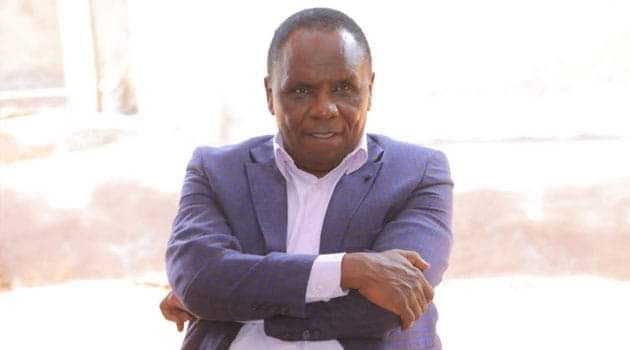
The grounds for Monda’s removal included accusations of abuse of office, a charge that has raised eyebrows among constituents and political observers alike. Additionally, claims of bribery added a layer of complexity to the impeachment process, with the assembly members deliberating on the veracity of these allegations during the intense session.
Despite Monda’s legal team raising concerns about the fairness of the impeachment process, the assembly’s majority signaled a strong stance in favor of removing the deputy governor. The vote tally, with 53 in favor, one abstention, and 15 against, underscores the depth of dissatisfaction among the assembly members regarding Monda’s conduct in office.
KMPDU Protest: Call for Medical Justice Echoes Through Nairobi Streets
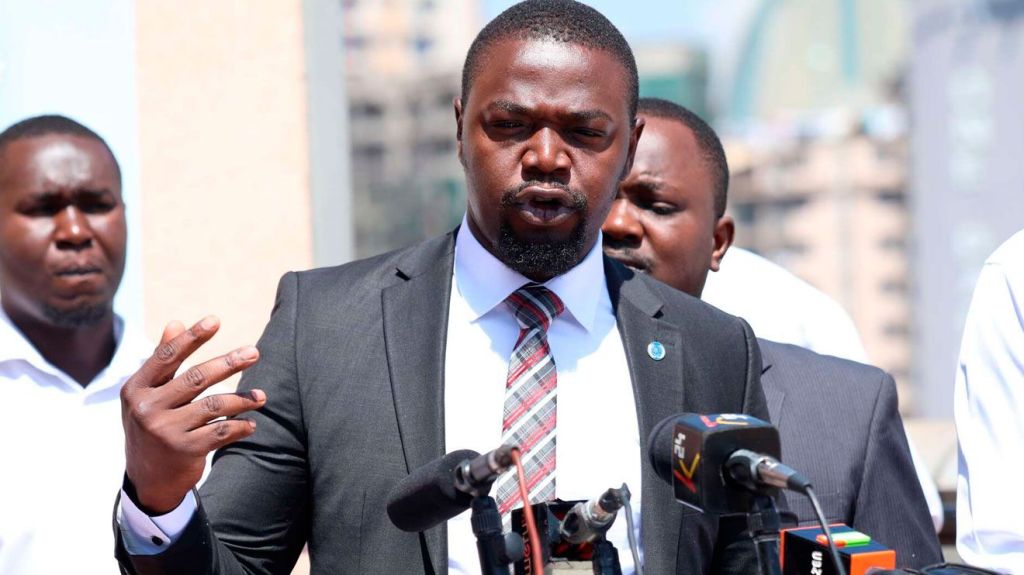
Dr. Davji Atellah, the Secretary-General of the Kenya Medical Practitioners, Pharmacists, and Dentists Union (KMPDU), was shot during a peaceful protest advocating for the delayed recruitment of medical interns. The incident occurred as Dr. Atellah led a procession in Nairobi, denouncing the sluggish hiring of medical interns and addressing the inadequate compensation for postgraduate students.
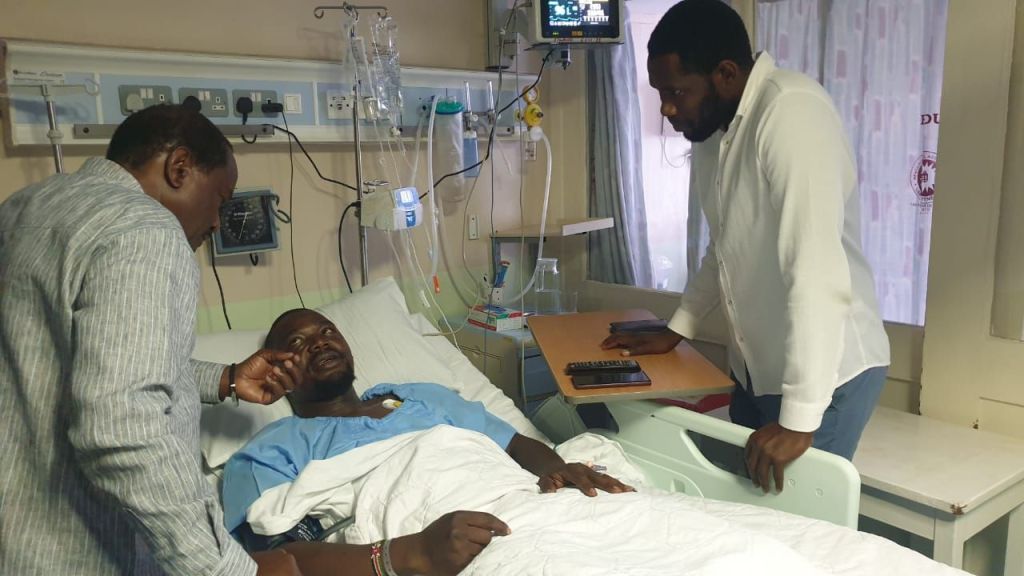
The KMPDU promptly issued a statement condemning the police, accusing them of being responsible for the shooting. Dr. Atellah, who sustained injuries, was swiftly transported to a nearby hospital for treatment. In a letter addressed to the Nairobi Police Commander, Atellah had earlier announced the peaceful demonstrations, aiming to highlight the frustration over the delayed recruitment and advocate for fair compensation for medical interns.
Last week, Dr. Atellah had issued a national strike threat scheduled for March if 1,000 medical interns were not hired promptly. He criticized the Ministry of Health for its refusal to employ doctors, asserting that it deprived Kenyans of essential medical services. The KMPDU’s protest serves as a poignant reminder of the healthcare challenges faced by both medical professionals and citizens alike, calling for urgent attention to address the systemic issues within the country’s healthcare system
Kenya and Haiti Forge Alliance To Deploy 1,000 police officers In Haiti
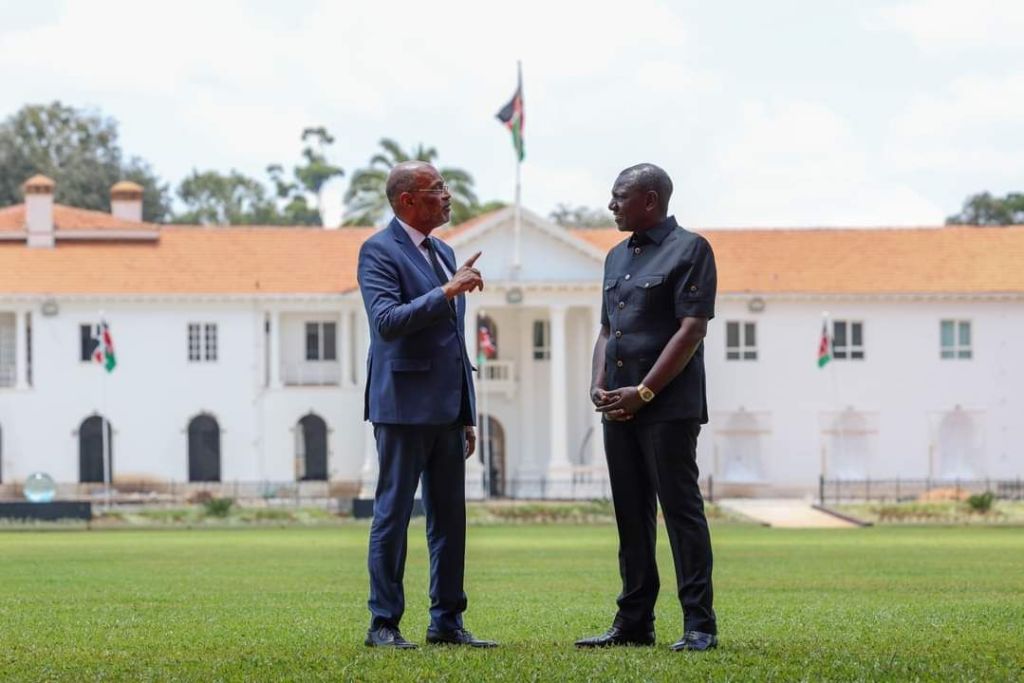
Kenya and Haiti have inked a historic deal paving the way for the deployment of 1,000 Kenyan police officers to the Multi-National Security Support Mission in Haiti. The agreement, a significant milestone in international cooperation, was formalized during a ceremony held at State House Nairobi, witnessed by President William Ruto of Kenya and Haiti’s Prime Minister Ariel Henry.
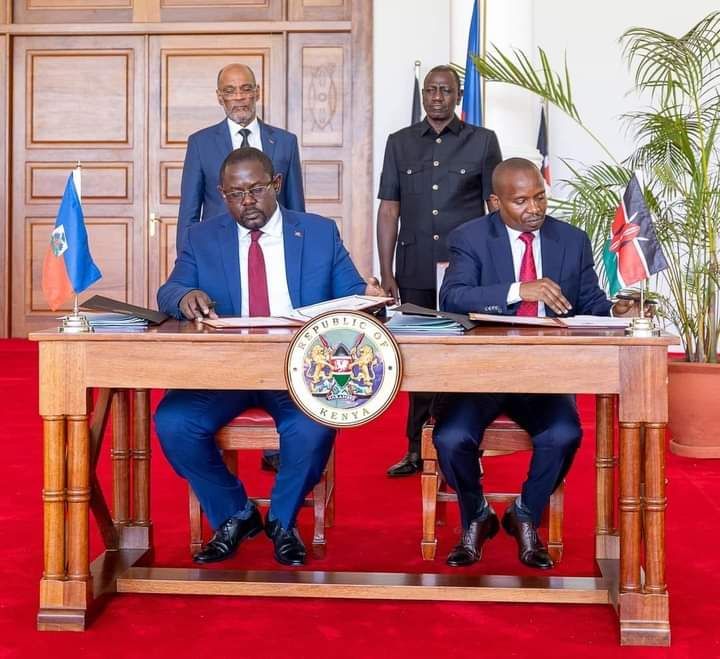
The signing of the agreement, however, unfolded against a backdrop of heightened tensions in Haiti. Even as Interior Minister Kithure Kindiki and Alix Richard, the Secretary General of the Council of Ministers, committed pen to paper, Haiti was gripped by a sense of unease following a brazen siege orchestrated by gangs at the main international airport.
Kenya’s pledge to deploy personnel to Haiti had garnered widespread support, particularly from the United States and other nations, who had refrained from committing their own forces to the ground. However, the journey to this landmark agreement faced its share of hurdles.
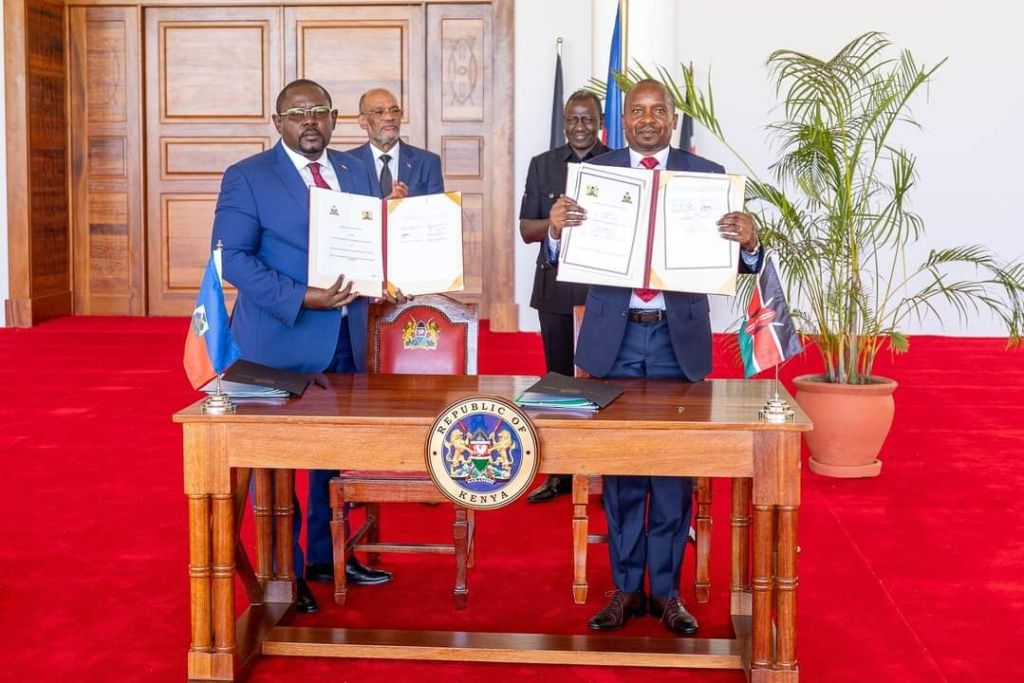
A Nairobi court initially deemed the decision unconstitutional, citing the absence of a reciprocal agreement between the two nations. In response, President Ruto emphasized the importance of such an accord and reassured that steps were being taken to address this concern.
On the momentous day of the agreement’s signing, President Ruto underscored the significance of the occasion, stating, “Prime Minister Henry and I have witnessed the signing of a reciprocal agreement here in Kenya’s capital Nairobi.” This reciprocal agreement not only validates Kenya’s commitment but also ensures a framework of mutual cooperation between the two countries.
The deployment of 1,000 Kenyan police officers marks a tangible step towards enhancing security in Haiti, a nation grappling with persistent challenges. With their expertise and experience, these officers are poised to make meaningful contributions towards restoring stability and fostering peace in Haiti’s communities.
Justin Muturi Warns KRA Over House Levy Deduction
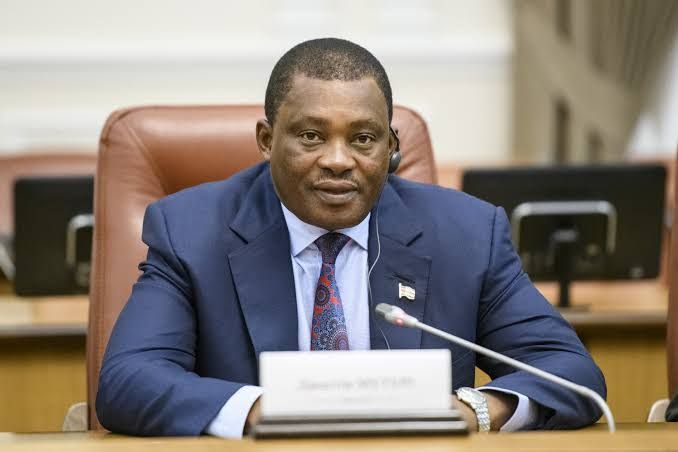
Attorney General Justin Muturi has issued a stern warning to the Kenya Revenue Authority (KRA), instructing them to cease the collection of housing levy from salaried Kenyans. Muturi asserts that the collection lacks a legal basis, citing a Court of Appeal decision from January 26, which upheld the High Court’s ruling declaring the levy unconstitutional.
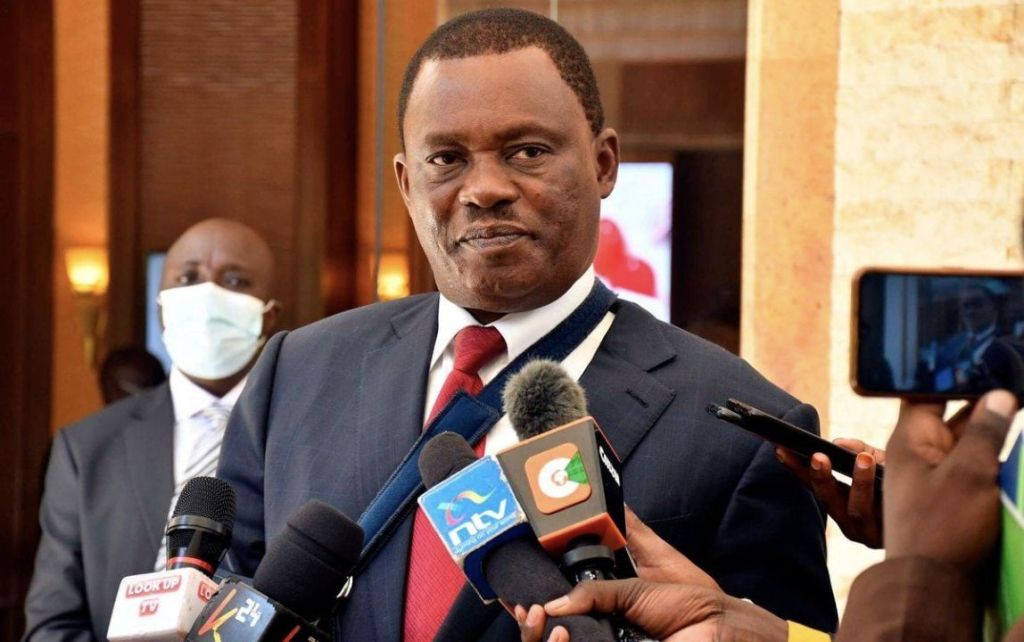
In a letter addressed to KRA Commissioner General Humphrey Wattanga, Muturi emphasized the legal void surrounding the implementation of the housing levy as outlined in section 84 of the Finance Act. “The upshot of this is that there is no legal basis on which the Housing Levy can be implemented,” Muturi stated unequivocally.
The move comes after disclosures by the Parliamentary Budget Office (PBO), revealing that the State Department for Housing and Urban Development had already collected a substantial amount towards the targeted Sh63.2 billion for the financial year ending June 2024.
The KRA Commissioner-General had sought guidance from the AG in a letter dated February 12, 2024, regarding the government’s stance on the controversial levy. Muturi’s directive offers relief to over 3.2 million Kenyans in formal employment who have been subjected to the contentious housing levy.
Since its inception, both employers and employees have contributed a total of Sh26.8 billion under the mandatory housing development levy. This financial burden has persisted despite legal challenges that have cast doubts on the viability of the affordable housing program.
The levy, set at 1.5 percent of gross salary, was intended by the government to fund the development of affordable homes and associated infrastructure. However, the High Court’s declaration of its unconstitutionality last November raised concerns among taxpayers.
Although the High Court granted the government time to appeal the ruling, the legal uncertainties surrounding the levy have persisted. Muturi’s intervention provides clarity and potentially paves the way for a reassessment of the government’s approach to financing affordable housing initiatives.
Fresh Rift Emerges in Meru County as Deputy Governor Accuses Governor of Coercion
Meru County finds itself embroiled in yet another political storm as Deputy Governor Isaac Mutuma publicly accuses Governor Kawira Mwangaza of orchestrating his removal from office. Mutuma’s allegations, unveiled on Wednesday, February 28, 2024, paint a picture of a power struggle within the county’s leadership.
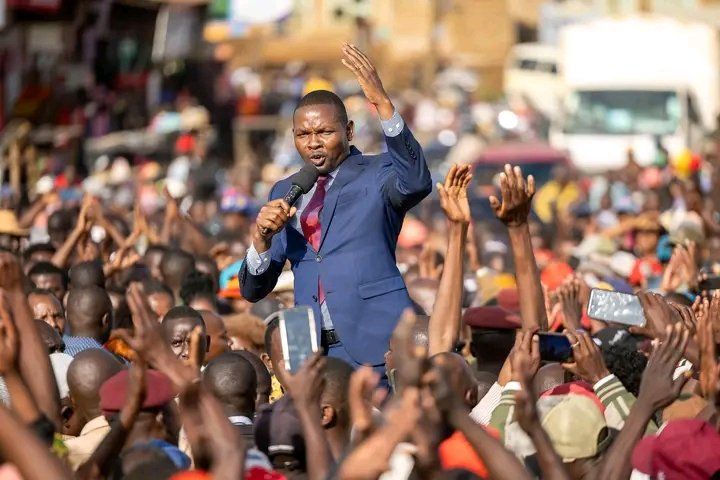
According to Mutuma, Governor Mwangaza has resorted to clandestine tactics, utilizing proxies to deliver threatening messages urging him to tender his resignation. This development marks a significant escalation in the ongoing feud between the two top officials.
This latest clash follows a series of grievances raised by Mutuma, dating back to October of the previous year. At that time, amid mounting tension, Mutuma had decried the relocation of his office from the current Meru County headquarters to the former premises, signaling a symbolic demotion in status. Additionally, Mutuma accused Mwangaza of cutting off crucial resources by unilaterally withdrawing personnel and funding from his office.
The discord between Mwangaza and Mutuma is deeply rooted in their divergent leadership styles, which have been at odds since their joint election on an independent ticket during the August 2022 General Election. The rift has been exacerbated by multiple attempts to impeach Mwangaza, who has managed to survive two such motions in the past.
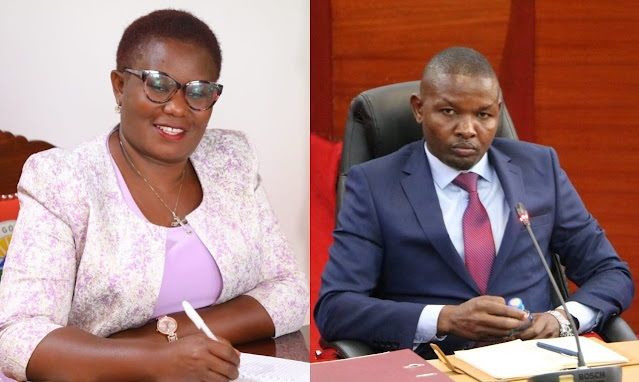
Responding to Mutuma’s claims, Governor Mwangaza has pointed fingers at unspecified “powerful individuals” allegedly working against her administration. She maintains that there is a concerted effort to destabilize her tenure, with Mutuma purportedly playing a central role in the scheme.
The escalating tensions within Meru County’s government underscore broader challenges facing devolved governance structures in Kenya. As the rift between the governor and her deputy deepens, residents are left to ponder the implications for service delivery and the county’s overall stability.
With both sides entrenched in their positions, the fate of Meru County hangs in the balance, as political maneuvering threatens to overshadow the mandate of delivering meaningful progress to its citizens. As stakeholders closely monitor developments, the question remains: will the leadership impasse be resolved, or will it continue to cast a shadow over the county’s future? “Ama namna ni gani?”
Diploma and Certificate Courses to be Eliminated from Public Universities
The Ministry of Education has unveiled plans to eliminate diploma and certificate courses from public universities. This announcement, made by Education Cabinet Secretary Ezekiel Machogu during a stakeholders engagement forum at the Kenya Institute of Special Education, marks a paradigm shift in the country’s approach to tertiary education.
Under the proposed changes, diploma and certificate programs will be exclusively offered by colleges and Technical and Vocational Education and Training (TVET) institutions. This decision aligns with the recommendations put forth by the Presidential Working Party on Education Reforms (PWPER), a task force commissioned by President William Ruto to address longstanding challenges within the education sector.
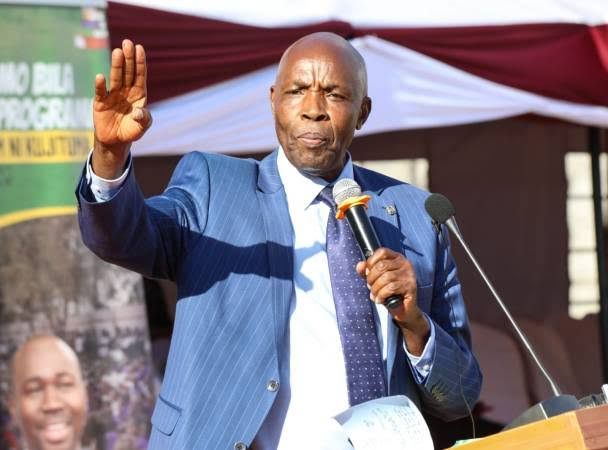
Speaking about the rationale behind the move, Education Cabinet Secretary Machogu emphasized the need for a systematic and progressive phase-out of diploma courses from universities. “This is to allow TVET institutions and national Polytechnics, as well as other middle-level colleges, to offer diplomas,” Machogu explained. This strategic realignment aims to better streamline the distribution of educational resources and enhance the relevance of vocational training in meeting the demands of the job market.
The proposed legislation, titled the Universities (Amendment) (No 5) Bill 2023, seeks to replace traditional diploma and certificate programs in universities with postgraduate diplomas and postgraduate certificate courses. Machogu underscored the importance of this transition, emphasizing the need to adapt university offerings to meet evolving societal needs and economic demands.
Furthermore, Machogu revealed plans to introduce bridging courses, subject to Cabinet approval, to facilitate the transition for students affected by these changes. Drawing parallels to previous initiatives undertaken between 2008 and 2016, Machogu highlighted the importance of establishing clear policy guidelines to prevent misuse of these programs.
The move to eliminate diploma and certificate courses from public universities represents a bold step towards reimagining the landscape of higher education in Kenya. By reallocating resources and redefining the roles of different educational institutions, the government aims to create a more efficient and responsive education system that equips students with the skills and qualifications needed to thrive in today’s dynamic job market. As the country moves forward with these reforms, stakeholders will be closely watching to assess the impact and effectiveness of these changes on the future of education in Kenya.
 Tongoa media